

Troberg
Sinister eater
- Joined
- 27 Jun 2001
- Messages
- 18,699
Som jag tjatat om, så håller jag på med min fantasyvärld Heroica. I den så varvar jag beskrivningar som ren beskrivning, flavor text, bakgrundsstory och kampanj. Fokus i den här diskussionen är flavor texts.
Jag använder flavor texts där det känslomässiga är mer centralt än ren information.
Någonstans så slog det mig att man kanske kan använda dem som spelarvägledning, att dela ut inför en scen. Inte som ett manuskript, utan som en informationsbärare, en stämningsbärare som för med sig den känslomässiga laddningen. Spelaren behöver inte följa den, utan det är för att ge en känslomässig grund. Kanske för att sno någon bra fras, på sin höjd.
Exempel som jag nyligen pysslade med (Cassandra har blivit räddad från några bad guys som tänkte tortera henne och äta hennes hjärna, och har bevittnat det hända med andra offer. Det lämnar emotionella spår. Ormun och Cassandra är sedan tidigare nära varandra. Ormun var central i räddningen.):
Hur skulle ni känna för en sådan handout inför en scen? Skulle det kännas styrande, även om ni har full handlingsfrihet? Ta er ur ögonblicket? Eller skulle det ge er en känsla för scenens tyngd och riktning? Ge bättre förståelse för karaktärerna?
Bra eller dåligt?
Jag använder flavor texts där det känslomässiga är mer centralt än ren information.
Någonstans så slog det mig att man kanske kan använda dem som spelarvägledning, att dela ut inför en scen. Inte som ett manuskript, utan som en informationsbärare, en stämningsbärare som för med sig den känslomässiga laddningen. Spelaren behöver inte följa den, utan det är för att ge en känslomässig grund. Kanske för att sno någon bra fras, på sin höjd.
Exempel som jag nyligen pysslade med (Cassandra har blivit räddad från några bad guys som tänkte tortera henne och äta hennes hjärna, och har bevittnat det hända med andra offer. Det lämnar emotionella spår. Ormun och Cassandra är sedan tidigare nära varandra. Ormun var central i räddningen.):
The Blue Marlin rides a calm sea, her wake silvered by moonlight, the shore of Ostranos already a dark shape behind them. Dinner is loud and warm, plates passed, voices overlapping, the sound of people trying to convince themselves that everything is back to normal. Laughter comes a little too quickly. Cups are refilled a little too often.
Cassandra rises without a word.
No one notices at first. A story is being told. Someone interrupts it. Another laughs. Cassandra slips away like a thought that never quite forms.
Ormun notices.
He waits only a heartbeat, long enough to be sure, then stands and follows her out onto the deck.
She is at the rail, hands resting on the wood, looking out over the moonlit water. The ocean is dark and endless, the moon broken into shards across its surface. For a moment he simply stands there, giving her space, the way he always does.
“Are you all right?” he asks, gently.
She turns toward him, and her face crumples.
“No,” she says, very softly.
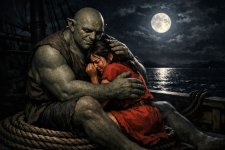
The word seems to empty something out of her. She takes a step toward him and then another, and suddenly she is crying, deep and shaking, the kind that has been waiting too long. Ormun catches her without thinking, lowering himself to sit on a coiled rope, pulling her into his arms. He cradles her against his chest, one hand steady at her back, the other resting where her hair meets her neck.
He does not speak. He does not rush her. He simply holds her and breathes, a solid thing in a world that has been anything but.
Her tears soak into his tunic. Her fingers clutch at him like he might vanish if she lets go. Ormun rocks her slightly, a slow, unconscious motion, eyes fixed on the dark horizon while the moonlight paints them both in pale silver.
When the crying finally slows, it leaves her hollow and exhausted. She draws a shaky breath and wipes her face with the heel of her hand, still leaning against him.
“Thank you,” she murmurs. After a moment, she adds, “I knew you would come for me. I just... I was afraid you wouldn’t find me.”
Ormun tightens his arms around her, just a little.
“The world is too small,” he says, quietly, “for me not to find you if you need me.”
She lets out a weak, broken laugh at that, then leans back into him, resting her head against his shoulder.
They sit there together, saying nothing, watching the moon and the slow, steady rise and fall of the sea. The ship creaks softly around them, a living thing carrying them forward, away from warm stone and hidden horrors, into open water and honest danger.
Eventually, she fell asleep, and he sat there, holding her gently, protecting her, until the sun rose.
Cassandra rises without a word.
No one notices at first. A story is being told. Someone interrupts it. Another laughs. Cassandra slips away like a thought that never quite forms.
Ormun notices.
He waits only a heartbeat, long enough to be sure, then stands and follows her out onto the deck.
She is at the rail, hands resting on the wood, looking out over the moonlit water. The ocean is dark and endless, the moon broken into shards across its surface. For a moment he simply stands there, giving her space, the way he always does.
“Are you all right?” he asks, gently.
She turns toward him, and her face crumples.
“No,” she says, very softly.
The word seems to empty something out of her. She takes a step toward him and then another, and suddenly she is crying, deep and shaking, the kind that has been waiting too long. Ormun catches her without thinking, lowering himself to sit on a coiled rope, pulling her into his arms. He cradles her against his chest, one hand steady at her back, the other resting where her hair meets her neck.
He does not speak. He does not rush her. He simply holds her and breathes, a solid thing in a world that has been anything but.
Her tears soak into his tunic. Her fingers clutch at him like he might vanish if she lets go. Ormun rocks her slightly, a slow, unconscious motion, eyes fixed on the dark horizon while the moonlight paints them both in pale silver.
When the crying finally slows, it leaves her hollow and exhausted. She draws a shaky breath and wipes her face with the heel of her hand, still leaning against him.
“Thank you,” she murmurs. After a moment, she adds, “I knew you would come for me. I just... I was afraid you wouldn’t find me.”
Ormun tightens his arms around her, just a little.
“The world is too small,” he says, quietly, “for me not to find you if you need me.”
She lets out a weak, broken laugh at that, then leans back into him, resting her head against his shoulder.
They sit there together, saying nothing, watching the moon and the slow, steady rise and fall of the sea. The ship creaks softly around them, a living thing carrying them forward, away from warm stone and hidden horrors, into open water and honest danger.
Eventually, she fell asleep, and he sat there, holding her gently, protecting her, until the sun rose.
Hur skulle ni känna för en sådan handout inför en scen? Skulle det kännas styrande, även om ni har full handlingsfrihet? Ta er ur ögonblicket? Eller skulle det ge er en känsla för scenens tyngd och riktning? Ge bättre förståelse för karaktärerna?
Bra eller dåligt?


